Change Management
Change is inevitable. The question is never whether your organisation will face disruption — it is whether you will lead it or be led by it.
About this course
Most change initiatives fail. Not because the strategy was wrong, but because the human side was underestimated. People resist change — not out of stubbornness, but because change is genuinely difficult. Understanding that is where effective change management begins.
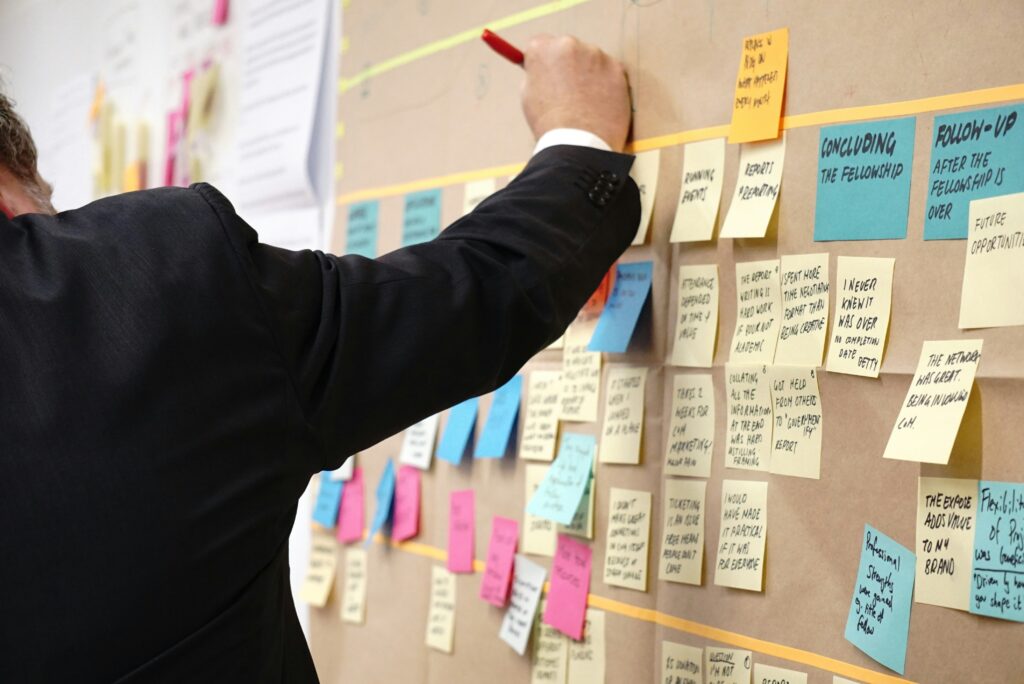
This course gives you the frameworks, the language and the practical tools to lead organisational change with confidence. You will work through six of the most important change models in management — Lewin, Kotter, McKinsey 7-S, Bridges, ADKAR and Gleicher’s Change Formula — and learn not just what they say, but when each one applies and what it misses.
More than theory, this course is about the messy reality of change — the resistance, the setbacks, the moments when momentum stalls — and what leaders who get it right do differently.
Skills you will learn
- Diagnose why change is being resisted — and distinguish between people who won’t change and people who haven’t yet been given a reason to
- Apply six change models to real situations — knowing which framework fits which type of change and when to combine them
- Build a change plan that accounts for both the structural and the human dimensions — because changing processes without changing behaviour rarely sticks
- Guide people through the six emotional stages of change — from shock and denial to integration — without losing momentum or trust
- Identify the conditions that make change succeed — and the warning signs that a change programme is heading for failure before it gets there
- Make change permanent — embedding new behaviours, updating systems and preventing the inevitable drift back to the way things were
Course Content
Course Content
Program Structure
- Type:
- Online course
- Duration:
- 4 hrs / self-paced
- Award:
- Certificate
- Language:
- English (full audio & text) 100+ AI translations (text)
- Level:
- Introductory
- Access:
- Lifetime access
$29.99
$11.99
- Price :
-
This course is part of the Project Management and Innovation Management programs.
Change Management
- Type:
- Online course
- Duration:
- 4 hrs / self-paced
- Award:
- Certificate
- Language:
- English (full audio & text) 100+ AI translations (text)
- Level:
- Introductory
- Access:
- Lifetime access
-
This course is part of the Project Management and Innovation Management programs.
100% Online
Access online programs anytime, anywhere
100% Self-Paced
Learn at your own pace with no deadlines
Earn a Verified Executive Credential
- Prestigious executive certificate
- Instant digital verification
- Secure & Lifetime validation