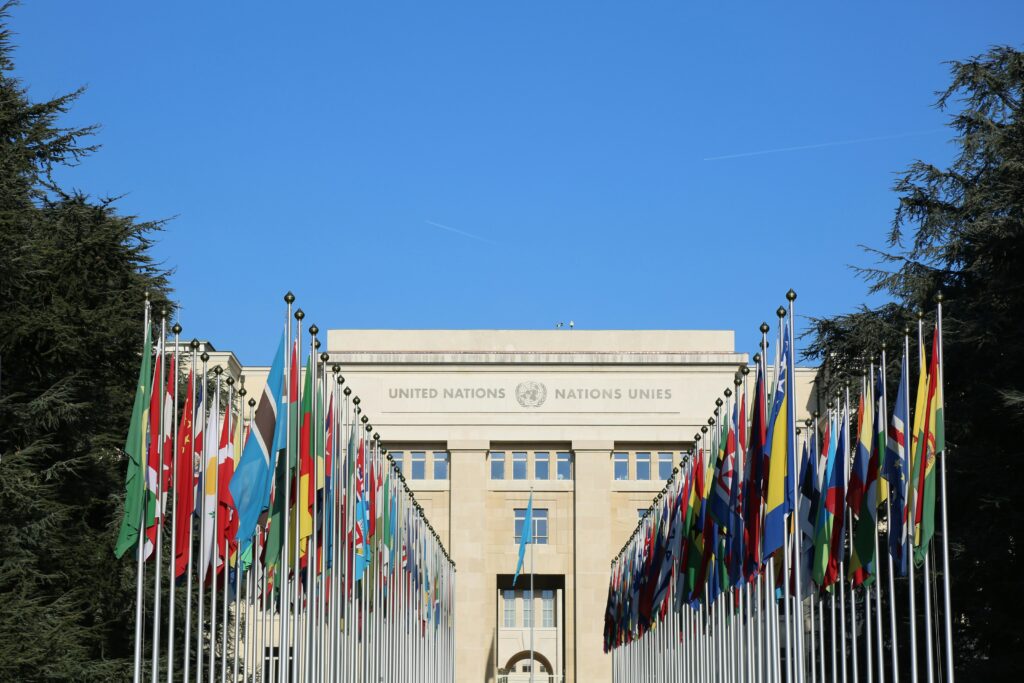
International Politics
Politics shapes everything — who gets what, when and how. This course gives you the framework to understand it.
About this course
Most people engage with politics through headlines. This course goes deeper — to the concepts, theories and frameworks that explain why political systems work the way they do, why they fail the way they fail and why the same questions about power, legitimacy and governance have occupied the best minds in history for over two thousand years.
You will work through the foundations of political science — from the basic concepts of sovereignty and legitimacy, through the major political thinkers from Plato to Rawls, to the six ideological frameworks that organise political competition today. You will then move into comparative politics, international relations theory and the causes of conflict — finishing with the UN’s eight factors of good governance as a practical framework for evaluating political systems anywhere in the world.
This is not a course about left or right. It is a course about how power works, how it is legitimised, how it is contested and how it can be held accountable.
Skills you will learn
- Distinguish between power, authority, sovereignty and legitimacy — the four concepts at the heart of every political analysis and every political dispute
- Identify and compare three regime types — and understand why the distinction between authoritarian and totalitarian is more than semantic
- Trace the development of political thought from Confucius to Rawls — understanding how each thinker responded to the political conditions of their time and why their ideas still matter
- Apply six political ideologies as analytical frameworks — reading political positions, policy debates and election campaigns with greater clarity and less bias
- Compare systems of government across countries — understanding why presidential and parliamentary systems produce different political outcomes
- Evaluate international relations using four theoretical frameworks — Realism, Liberalism, Constructivism and Critical Theory — and understand why states behave the way they do
Course Content
Course Content
Program Structure
- Type:
- Online course
- Duration:
- 4 hrs / self-paced
- Award:
- Certificate
- Language:
- English (full audio & text) 100+ AI translations (text)
- Level:
- Introductory
- Access:
- Lifetime access
$29.99
$11.99
- Price :
-
This course is part of the Global Governance program.
International Politics
- Type:
- Online course
- Duration:
- 4 hrs / self-paced
- Award:
- Certificate
- Language:
- English (full audio & text) 100+ AI translations (text)
- Level:
- Introductory
- Access:
- Lifetime access
-
This course is part of the Global Governance program.
100% Online
Access online programs anytime, anywhere
100% Self-Paced
Learn at your own pace with no deadlines
Earn a Verified Executive Credential
- Prestigious executive certificate
- Instant digital verification
- Secure & Lifetime validation