Economics
Economics is not just a subject — it is a way of thinking. This course teaches you how.
About this course
Most people encounter economics as a collection of charts, formulas and abstract theories. This course takes a different approach. It builds from the ground up — starting with ten deceptively simple principles that explain how individuals make decisions, how markets organise activity, and how entire economies behave.
Based on Mankiw’s foundational framework — the most widely taught approach to economics in the world — this course gives you the mental tools to understand trade-offs, incentives, market failures and macroeconomic policy. Not just as theory, but as a lens you can apply to everyday decisions, business strategy and public policy.
By the time you finish, economics will not feel like a foreign language. It will feel like common sense — with rigour behind it.
Skills you will learn
- Recognise the strengths and limits of the Mankiw framework — and think critically about the assumptions behind mainstream economicsusiness strategies. To see how these forces interact in the real world, the course culminates in a detailed case study of the 2008 U.S. economic crisis. This analysis provides powerful lessons on market behavior, policy impact, and the interconnectedness of the modern global economy.
- Understand why every choice has a cost — and how thinking in opportunity costs changes the way you make decisions
- Apply marginal thinking to evaluate options the way economists — and the best business leaders — actually do
- See why markets work, when they fail, and what governments can and cannot fix
- Understand the forces behind inflation, unemployment and economic growth — and why managing them involves unavoidable trade-offs
- Evaluate economic policy arguments with confidence — distinguishing what works in theory from what works in practice
Course Content
Course Content

Program Structure
- Type:
- Online course
- Duration:
- 3 hours / self-paced
- Award:
- Certificate
- Language:
- English (full audio & text) 100+ AI translations (text)
- Level:
- Introductory
- Access:
- Lifetime access
$29.99
$11.99
- Price :

-
This course is part of the Mini-MBA and Global Governance programs.
Economics
- Type:
- Online course
- Duration:
- 3 hours / self-paced
- Award:
- Certificate
- Language:
- English (full audio & text) 100+ AI translations (text)
- Level:
- Introductory
- Access:
- Lifetime access
-
This course is part of the Mini-MBA and Global Governance programs.
100% Online
Access online programs anytime, anywhere
100% Self-Paced
Learn at your own pace with no deadlines
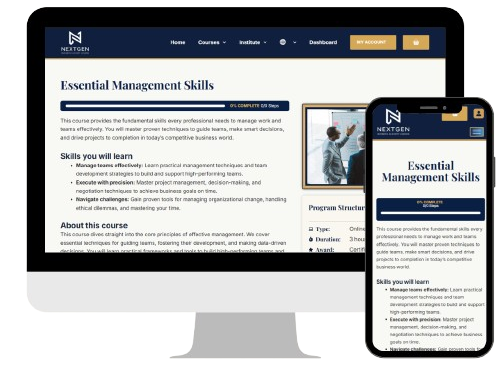
Earn a Verified Executive Credential
- Prestigious executive certificate
- Instant digital verification
- Secure & Lifetime validation